
You meant to own a business, but now it owns you.
That’s right, if you’re working 55 hours a week on the clock (plus the hours lying awake at night) and you can’t risk taking a vacation, then you’re not really an owner. You’ve just hired yourself for a very hard job that doesn’t come close to paying you what you should be worth. To keep your job, it’s up to you to keep the business going, which often feels like you’re hanging on by your fingernails.
(PS: If that’s not you, but you know someone like that, please send them to visit this website. They’ll thank you later… when they get the time).
How and why BVB got involved
If that does describe your current experience, take comfort in the thought that you are not alone.
- 70 percent of owners surveyed by USA Today say they work 55 hours or mere weekly.
- Business brokers have long recorded (and I can back up from personal experience in the field) that 80 percent of Main Street owners learn to their dismay that they cannot sell their businesses, even profitable ones, at any price.
That occurs for two reasons: the business is really no good (in which case it wouldn’t be in business very long), or because the profitable ones have owners who are so overloaded that no sane person would give them money to buy their job.
As a business broker, I spent years meeting with small business owners. I love doing that. They are doing their level best to bring us goods and services, usually in competition with big-box or national brands that can underprice them and get better locations. They are leaving it all on the line, and I mean that quite literally. Personal assets, personal health, family relationships, sweat, tears, even sometimes blood, all to keep this company going. It felt really horrible, like a betrayal on my part, to have to tell eight out of ten of them them that after all those years of hard work and sacrifice that they would get little or nothing for it when it comes time for them to retire. A bit of play money, maybe, but no retirement, and for most, no buyer at all. Nobody wants to be the bearer of that kind of news.
What made it even sadder was that it didn’t have to be that way.
So many times I said, “I wish I would have met you sooner. With a couple of years to work on it, we could get you something decent for all the work you have put in.” For them, it was too late. “I’ll do it someday” had turned into “I need to step away now.”
It bothered me so much that I decided to walk away from business brokerage, always hustling to get new listings. Instead, I would help those owners who were stressing themselves every day but headed in the wrong direction. Instead of wishing what they would have done, I decided to provide a realistic pathway for them to do it. That pathway is the Business Value Booster program.
Do you know this person?
You’re in the right place if you own a “Main Street” small business ($500k-$5M revenue) and these experiences common to many Main Street owners are pretty familiar to you:
- You need to keep long hours and work many weekends to deal with issues and keep the business running.
- Staff turnover creates substantial burdens on your time for hiring, training, quitting or firing , and starting over..
- If you have a couple of team chiefs working for you, they are supervisors, not managers. They cannot run the entire business by themselves for any length of time.
- There is no way you could take a 30+ day vacation completely disconnected from the business. By the time you got back, it would be a disaster that would take lots of time and money to fix, or it might never recover.
- You’re hoping that if you work at it hard enough, you will overcome these teething pains that have been going on for several years now.
- You may be able to take time to think about business strategy and your personal planning, but with all this going on, it will have to wait until someday when I get some time (and you know that day will never come).
(PS: If that’s not you, but you know someone like that, please send them to visit this website. They’ll thank you later… when they get the time). I know you already saw that, but if you’ve got a friend who needs help, it costs nothing but a couple of clicks to help them. Send them a link to this page.
It’s Not You
 What we said above. The vast majority of small business owners are in this same place. I call it “Survival Island”.
It’s part of the myth of small business ownership that you work your tail off for years, and then one day the magic happens, you make a lot of money, and everyone lives happily ever after.
They call it a myth because it doesn’t happen that way in reality. You can come to believe it because
- People publish statistics about startups failing within the first five years. You’ve been around longer than that, so it’s not failure. The magic is there, if you keep digging.
- Every business owner in your market segment is telling you how difficult it is but only the strong survive. Be strong.
- Every small business owner you meet tells you that they are successful because they just powered through. “Keep working at it.”
- Your family desperately wants to hear that things are going to start getting great soon. Just a little while longer. So that’s what you tell them.
- You have some much of your personal assets and your personal pride wrapped up in it that you don’t dare to call it quits. Just work harder.
You’ve tried the snake oil already
Maybe you have investigated some CEO coaches or advisors before, but you’re still not willing to waste time on thinking about events that might occur years from now when you’re busting your tail trying to keep a lid on the here-and-now.
Why they didn’t work for you
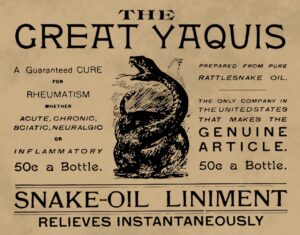 Many of them may have slick presentations but they sound too vague and cloud-level to be useful for you. You’re right. The cheaper ones are just scraped off the internet into a pretty “course” and the vendor can’t help you execute. The market leaders have more credible experience, but they’re teaching material based on “merger and acquisition (M&A)” processes that are appropriate for mid-market companies ($10M-$200M in revenue) or they’re built on internet startup models. Either way, so their suggestions can’t work for you.
- The really cheap ones (and some not so cheap) are generic training about how to get more productive by tracking your time on your calendar and on spreadsheets. While those are good skills to know about, that’s not the real problem or the real solution.
- Many of them are about how to manage your intermediate managers (your “C Suite”). Yeah. That’s a sign they aren’t tuned to your Main Street business.
- Many of them have exotic consultant models that would take a lot of time to absorb you’re your brain, let alone implement on the shop floor. handle your You don’t have a large back-office staff to do all those things, even if they were relevant.
You’re also very busy keeping your company running, and you don’t have time for long-term strategizing, nor do you have the budget for exhaustive consultant support, if those non-revenue-producing activities may or may not work in the long term.
What those programs didn’t have
You were right. Investing time, effort, and money in things that don’t work when you’re already stretched close to breaking point.
What if:
- There was a program built specifically for Main Street companies like yours?
- In a few hours a week over a few weeks, you could get your company moving at a sustainable pace towards clear, achievable, relevant goals?
- There would be no doubt whether your efforts paid off?
- Your company wouldn’t backslide as soon as the program was over, because the solution would be baked in by the employees themselves to their everyday work?
- You had someone to check in with and make sure you did take those few hours to keep moving forward towards your goals?
Why not just gut it out?
Fair question, since that’s what most of the other owners around you are doing.
If you keep doing what you are doing, only working harder at it, all you will get is more of what you have now. Longer hours, more stress, and perhaps a little more revenue, but also much higher likelihood that Someday will come calling on you all the sooner. And the company will be even harder to sell when that day comes.
How does Someday present itself? With sudden demands that you scale back your activity in your work. Are you sure none of these things could possibly happen before you turn 70?
- Illness (yourself or a family member)
- Family rebellion over never seeing you at family events or getting your help at home
- Disagreements with business, family, or financial partners in the direction of the business that end up dissolving it
- Burnout as your body or mind finally rebel against being abused all these years
- Cumulating shifts in your industry forcing major changes in products or processes that you are too busy to deal with until it is too late
That doesn’t mean “let me list your business for sale now”. Really, what would be the point?
What I want you to do is start enjoying the ownership of it now, which would also make it a better asset in the future.
If instead you keep doing what you are doing, nothing will change, the business will continue to teeter on the edge of disaster every day (even if it is profitable), and you will continue to be miserable. Which makes it all the more likely that it will stress you and your family out enough that illness or violent disagreements will force you to step back all the sooner.
Over-stretched owners often just keep trying to survive without ever enjoying the benefits of ownership and then when the time comes that they must step away, their unprepared businesses are worth nothing to anyone else.
Over-stretched owners keep assuming that anything that isn’t happening today can wait until next year or someday when they have time, which they will never find. But the truth is that most of the time, you don’t choose when someday will be: Someday chooses you. Look back over the past 5 years and think about what has happened that you never expected 5 years ago. Hmmm. Is everything going to go just the way you hope for the next 5 or 7 years?
What if you do something now?
Most of the things you need to do to turn your company into one that is pleasing to own and will be a valuable asset when Someday comes can be done fairly inexpensively if they are done in good order. If you wait until Someday is staring you in the face, demanding action, these same simple tasks will be really expensive and disruptive, and often cannot be done at all, i.
 The good news is that if you do take those small steps starting now, not only will you make your business a valuable capital asset in the future, but you will also make it more profitable and more enjoyable in the meantime. More income to add to your resources. More time to spend on your real goals, on the things you really enjoy doing, and with your loved ones.
This is not a cloud-cuckoo-land speculation or visons of Wall Street to get you to jump in.
The much simpler and more practical goals are:
- Within a six months, you will be able to take off for a week or so, entirely unplugged from the company, and when you get back, nothing dramatic will have happened.
- Within 12 to 18 months, depending on the complexity of your company (and its issues), you can do the same, only for 30 days or more.
- From then on, you can keep doing that and the company will do just fine without you
- You will be able to do the things that got you into owning a business in the first place: financial security, quality of life for you and your family, the opportunity and resources to make a difference in your community.
- When Someday comes, potential buyers will think “Yes, that is exactly what I want in owning a company”.
What should you do next?
If you are willing to try something other than what you are doing right now, you can choose to ask for help from me, or someone else, or try to do it yourself. If you don’t do it, or don’t get some help to see that it is done, you’ll just keep doing what you are doing now.
To solve the problem of overwork and constantly feeling that the company is on the edge of disaster, you need to address what is at the core of these highly-related problems. That risk is owner dependence. The company needs to become owner independent. It needs to be able to operate and continue to generate profits without your constant presence.
That sounds simple but it means that many aspects of your company need to work properly of themselves and then together with other processes within the company. It’s not going to happen overnight, but it can happen without throwing the company into chaos, and without taking so long to do that you lose interest and give up.
You and your business must take these three basic “R-O-I” steps to avoid joining the 87 of owners who are headed towards massive disappointment because they choose the fourth option of putting off a decision yet again and essentially opt for doing nothing.
- R = Recognize the realities of the market and of your company
- O = Obstacles. There are 4 key obstacles that will make your business unsellable no matter how attractive its numbers appear to be. They also put your business at risk of failing at any moment. We need to get these out of the way first!
- I = Improvements. Once you’ve gotten past being unable to sell, you make constant improvements in many possible areas to move from being theoretically sellable but not particularly attractive (and hence at a weak price) to being among the 6 percent of owners who manage to get a fair price. My model has 13 general areas to examine, but you may well find others as you are going along. You can keep doing this as long as you want, because the more you do, the more profitable the business becomes and the more independent it can be of needing you there to guide it at all times.
I can also tell you that you can’t achieve your goals with one big campaign to change things. As it stands today, your company doesn’t have the knowledge and the tools to achieve that. All you would do it throw it into complete turmoil, and most of our team would quit. The only people making any money would be the consultants who advised you to do this (as long as you could still afford to pay them). It would be very surprising if your company survived.
Instead, you need to approach this in two big phases. The length of the phase and the number of cycles within each phase, and hence the length of the phase, will depend on how complex your company is now and how much it depends on you to get things done.
- Kickstart: Get started on less ambitious goals that are still meaningful enough to create progress. You can get the first result in 4-6 months depending where you are now and how complex your company is. In this opening round, you should deal with the Reality and Obstacles aspects and begin implementing some Improvements. My simple measure for you would be your ability to take progressively longer and more frequent vacations, not because you need lots of margaritas but because when you’re not there, the business proves that it can run itself, first in little things and later almost independent of you. We call our first cycle the Kickstart, because it gets things going. That first kickstart will only let you be disconnected for 7 days. When you first agree to it, it will seem ridiculous and dangerous, but if you approach it right, it will work and nothing serious will go wrong.
- Stability: Once you’ve succeeded in your Kickstart, you and your staff will have gained the experience and confidence to do it again, and again. with each cycle, your company is becoming less dependent on your constant presence. You’ll know you’re getting there when you can take off for 30 straight days.
- Ownership: Once you can do that, your company is becoming truly independent of you. Do it again, and again, until you can (and do) take off whenever you want for as long as you want to do other things – like, perhaps, fixing another company or spearheading a foundation. By that time, your company, and your job in it, will look pretty good to other business owners. You get to keep enjoying it as long as you want, and when the time comes, they’ll be lining up to buy it.
As I said, you can do this yourself. With the Business Value Booster Method in your hand, you can follow the steps, interpret your situation, and implement. I’ve made my method available to you as a book on this website, as well as providing lots of explainer material, instead of making it a secret you only get if you buy an expensive program. I do that because you would be one owner in ten thousand if you followed through on the method without someone prompting and pushing. But if that’s you, go for it.
Alternately, you can discuss whether we have room for you in our Kickstart program. You’ll find the Starter Pack in many places on this website, and after you’ve taken a couple of hours to work through that, you’ll know a lot more about what you want, what you need to do, and whether we’re the right fit for each other. Then we’ll see if we can get you into a Kickstart.
The only thing I ask is that you commit to doing something.